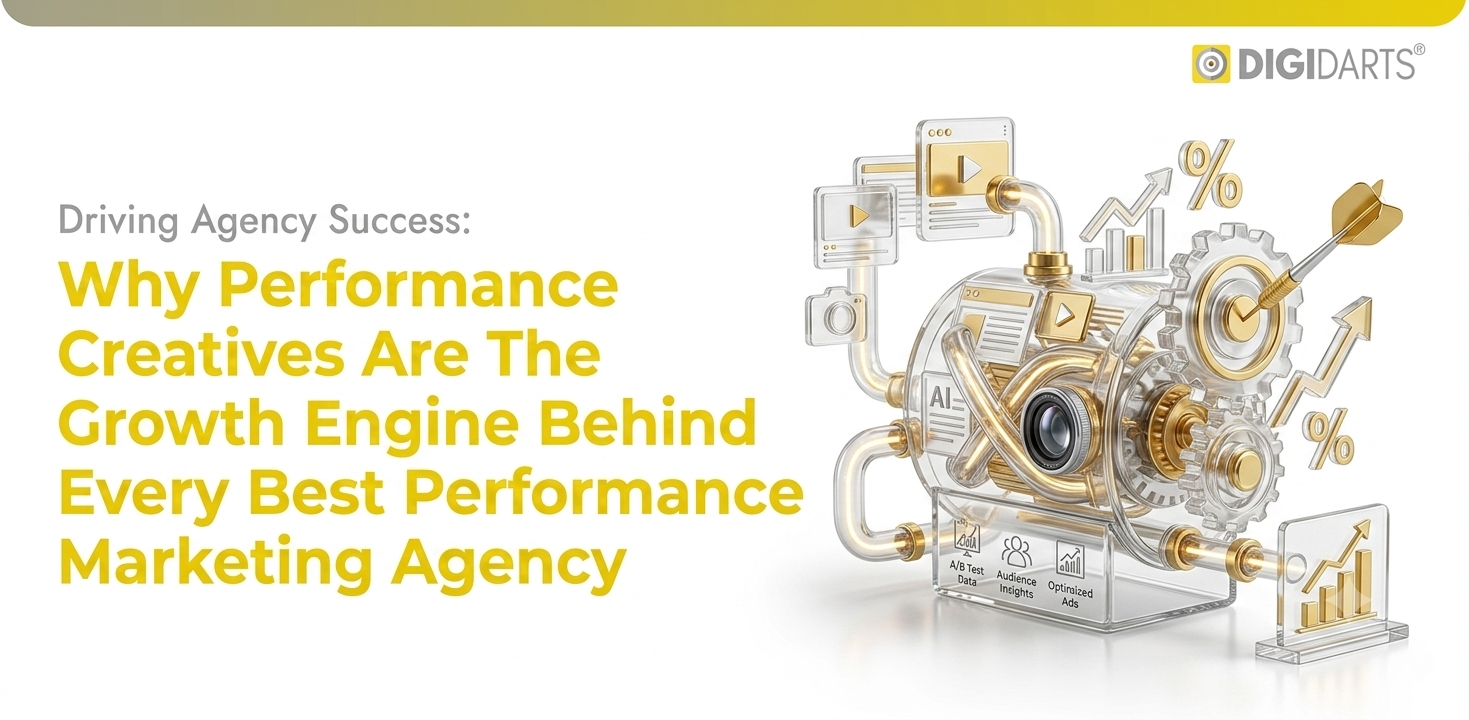
 Performance marketing is often associated with media buying, audience targeting, budgets, attribution, and optimisation. But another factor can determine whether a campaign earns attention or gets ignored: the creative. For any best performance marketing agency, creative strategy is no longer a separate brand exercise. It is a measurable part of how campaigns attract, engage, and convert the right audiences.
Why Does Creative Quality Matter in Performance Marketing?
A well-targeted campaign cannot compensate for an advertisement that fails to communicate its value. Users scroll quickly and decide within seconds whether something deserves attention. The creative becomes the first point of contact between a brand and a potential customer.
Strong advertising creatives combine the right message with an appropriate visual format, tone, offer, and audience insight. A product demonstration may work better for a consideration-stage audience, while a short, benefit-led video may be more effective when introducing a product to new users.
Clear messaging can help audiences understand an offer, recognise a problem, or see why a product is relevant. That makes creative development an important part of performance strategy rather than simply a finishing layer.
How Creative Influences Campaign Results
An engaging opening can improve attention, while relevant messaging can encourage users to explore further. Strong product presentation can reduce uncertainty, and a clear call to action can make the next step easier to understand.
Consider an e-commerce brand launching a new skincare product. One advertisement might focus on ingredients, another on the product experience, and a third on a specific customer problem. Yet the response to each message can differ significantly.
This is why creative decisions need to be connected to campaign data. Instead of asking whether an advertisement “looks good,” marketers should ask whether it communicates the intended value proposition and creates the desired response from the intended audience.
The Role of Testing and Creative Optimisation
Performance marketing depends on learning. A campaign can test audiences, placements, bidding strategies, landing pages, and creative variables. Creative testing matters because small changes can alter how a message is understood.
Teams can test elements such as the following:
- Hooks and opening frames
- Headlines and value propositions
- Product demonstrations versus lifestyle visuals
- Static, carousel, and video formats
- Calls to action
- Different audience-specific messages
If a brand believes customers respond more strongly to convenience than price, for example, creatives can be developed around that insight and evaluated against alternative messages.
Over time, results create a feedback loop. This makes performance creatives an evolving asset rather than a one-time deliverable.
What Makes a High-Performing Creative?
There is no universal formula for a successful advertisement, but high-performing work usually shares a few characteristics. It captures attention quickly, communicates one clear idea, reflects the audience’s context, and makes the intended action easy to understand.
The strongest performance creatives also balance clarity with relevance. Relevance is equally important. A visually impressive advertisement may still underperform if it speaks to the wrong need or uses a message that does not match the audience’s stage in the buying journey.
Strong creative also considers the platform. A format designed for a vertical short-video environment may require a different storytelling approach from a display advertisement or social carousel. Creative strategy should account for how people consume content on each channel rather than simply resizing the same asset everywhere.
Why Creative Strategy and Media Buying Must Work Together
Creative and media buying are often treated as separate functions, but performance improves when they inform each other. For a best performance marketing agency, media data can reveal which audiences, placements, messages, and formats are generating stronger signals. Creative teams can use those insights to develop more relevant concepts.
A new creative angle can also uncover a valuable audience response that changes how campaigns are structured. When media and creative teams share insights, optimisation becomes more informed and less dependent on assumptions.
How Agencies Build a Creative Performance Loop
A performance-led agency should connect research, creative development, media execution, measurement, and optimization into one continuous process. Creative briefs should be informed by audience and campaign insights, while campaign results should feed directly into the next round of creative decisions.
At Digidarts, this integrated thinking helps keep creative closer to the business objective. It is about understanding what the audience needs to hear, identifying how that message can be expressed effectively, and using campaign learning to improve future iterations.
Why Brands Need a Performance-Led Creative Approach
As digital advertising becomes more competitive, brands cannot rely on targeting alone to win attention. A sophisticated media strategy still needs a message that people understand and care about. That is why performance creatives should be treated as a strategic growth lever, supported by research, testing, measurement, and refinement.
Building Better Performance Through Creative Strategy
For brands evaluating a best performance marketing agency, the ability to connect creative thinking with media and data is an important consideration. Digidarts approaches performance marketing with this broader view: creative is not merely an aesthetic component of advertising. It works alongside strategy, targeting, media buying, and optimization to help brands make campaigns more relevant, measurable, and responsive to what audiences actually do.
FAQs
1. Why are creatives important in performance marketing?
In performance marketing, performance creatives shape how quickly an audience understands a brand’s message and decides whether it is relevant to them. They can also provide valuable inputs for campaign testing and optimisation, helping marketers identify which concepts, formats, and messages are resonating with their target audience.
2. What should brands test in digital advertising creatives?
Brands can test hooks, messaging, visual formats, calls to action, product presentation, and audience-specific value propositions. Testing should be guided by a clear hypothesis rather than producing variations without purpose.
3. Should creative and media buying teams work together?
Yes. Media data can reveal audience and placement insights, while creative testing can uncover which messages resonate with those audiences. Combining both helps create a more informed optimization process.
4. How can Digidarts help brands improve their performance marketing creatives?
Digidarts can bring together creative strategy, audience insights, campaign data, testing, and optimization to develop advertising concepts that are aligned with specific campaign objectives. The focus is on learning from performance data and continuously improving creative direction.
5. Is creative strategy relevant for every type of digital campaign?
Creative strategy can be valuable across different campaign objectives and platforms. The format, message, and execution should simply be adapted to the audience, channel, stage of the customer journey, and desired action.