 E-commerce growth needs a lot many factors to play right together. Brands need to attract the right audience, create relevant experiences, reduce drop-offs, and turn customer interactions into measurable sales. This is where performance marketing becomes important.
With AI transforming digital marketing, brands can now automate routine campaign tasks, understand customer behaviour in greater depth, and personalise experiences at scale. For businesses working with the best performance marketing agency, the opportunity is not simply to run more campaigns, but to make every campaign more targeted, measurable, and conversion-focused.
1. Use Data to Understand Your Customers
Every successful e-commerce campaign starts with understanding who you are selling to. Website visits, previous purchases, search behaviour, product interactions, and engagement patterns can reveal what customers actually want.
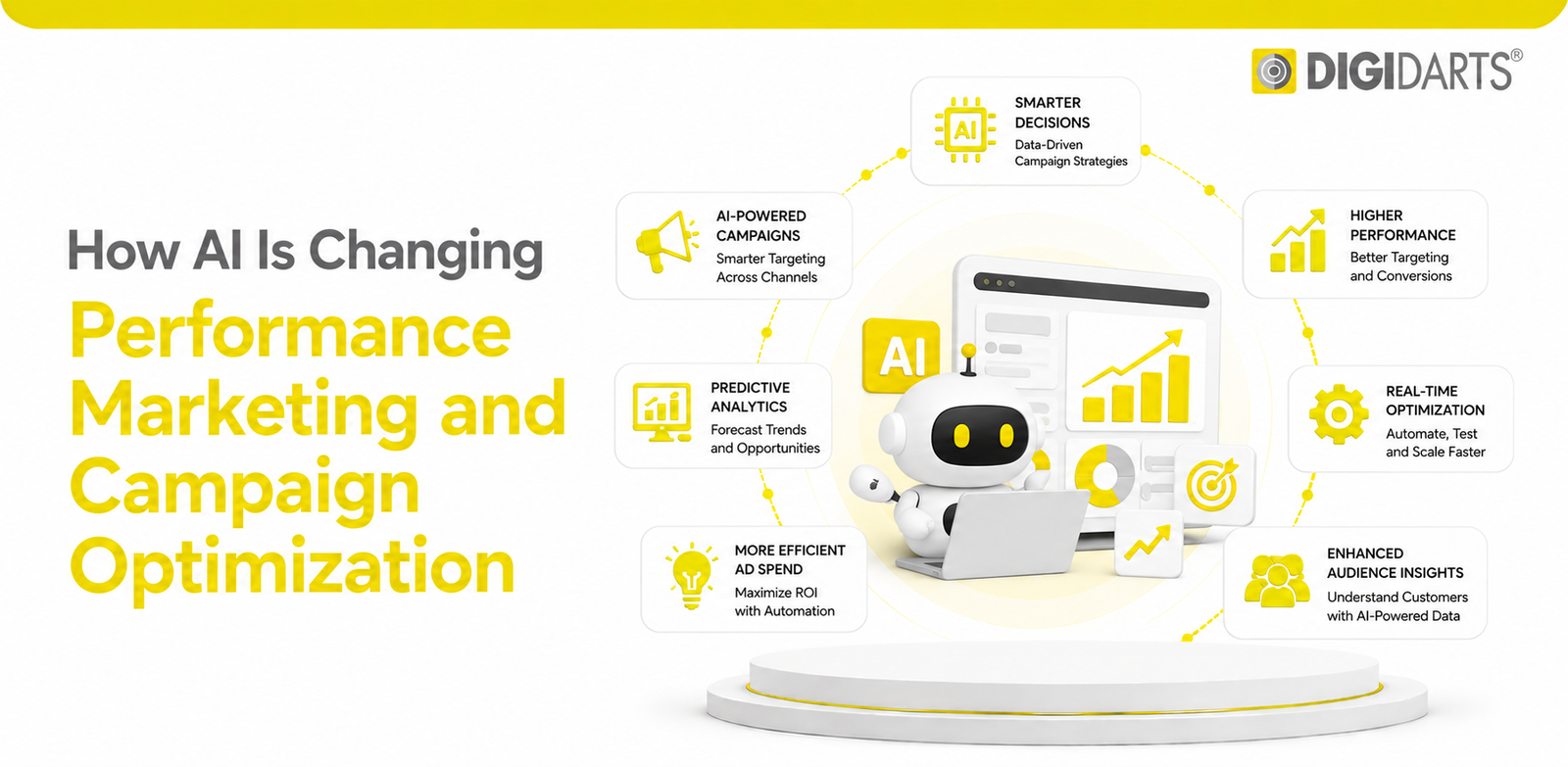
AI analyses large amounts of customer data quickly and identify patterns in product interest, purchase intent, and drop-off points. These insights help marketers understand customer behaviour better and create more relevant audiences and campaigns based on real data rather than assumptions.
2. Build Smarter Audience Segmentation
Treating every website visitor as the same can limit campaign performance. Different customers may be at completely different stages of the purchase journey.
For example:
- New visitors: Show product benefits, reviews, introductory offers, or educational content.
- Product viewers: Retarget them with the products they explored and relevant reasons to purchase.
- Cart abandoners: Use reminders, product benefits, or time-sensitive communication to encourage completion.
- Existing customers: Promote complementary products, new launches, or repeat purchases.
AI can make this segmentation more dynamic by continuously analysing behaviour and adjusting audience groups as customer actions change.
3. Personalise the Customer Experience
Personalisation is becoming a major part of e-commerce conversion strategy. Customers are more likely to engage with content that reflects their interests instead of generic messaging. AI allows brands to personalise website content, email communication, product recommendations, and advertisements based on individual behaviour.
A customer who repeatedly explores running shoes, for instance, can receive recommendations around relevant footwear, apparel, or accessories rather than seeing unrelated products. This level of personalisation can help brands make the shopping experience more useful while allowing marketers to manage large customer segments without creating every variation manually.
4. Optimise Paid Campaigns in Real Time
Paid advertising is one of the most important components of e-commerce performance marketing. However, campaign performance can change throughout the day based on audience behaviour, competition, demand, and other factors.
AI-powered platforms automate several optimisation activities, including bid adjustments, audience targeting, budget allocation, and creative testing. This allows campaigns to respond to performance signals instead of relying entirely on manual changes.
The role of marketers then shifts towards setting the right objectives, understanding performance trends, developing stronger creative concepts, and deciding where campaigns should go next.
5. Create High-Converting Ad Creatives
Getting attention is only the first step. Your ads should quickly show the product’s value and give customers a reason to click. Test different creatives around product benefits, offers, use cases, and customer reviews.
AI becomes a reliable tool the creators and content executives leverage to draw inspirations and produce creative variations faster, while marketers ensure the messaging stays relevant to the brand and audience. The best performance marketing agency combines smart technology with strong creative strategy to drive better results.
6. Strengthen Retargeting Across the Funnel
Not every customer buys on their first visit. Some compare products, read reviews, check prices, or leave the website before deciding. Retargeting helps brands reconnect with these users based on their actions.
Someone who viewed a product can see a product-focused ad, while someone who added it to their cart can receive a reminder to complete the purchase. The best performance marketing agencies use these customer signals to create relevant retargeting campaigns instead of showing the same ad repeatedly.
7. Focus on Conversion Rate Optimisation
Driving traffic does not guarantee sales. If a website has a complicated checkout process, unclear product information, slow pages, or weak calls to action, advertising efforts very much lose their impact. Conversion rate optimisation looks at what happens after the customer clicks an advertisement.
Brands should regularly evaluate:
- Product page clarity and quality
- Mobile shopping experience
- Page loading speed
- Product reviews and trust signals
- Pricing and offer communication
- Checkout experience
- Payment and delivery information
The goal is to remove unnecessary friction and make it easier for interested customers to complete their purchase.
8. Use Predictive Insights to Improve Decisions
Historical campaign data can tell marketers what happened, but predictive analytics can help identify what may happen next.
AI helps forecast potential customer churn, identify leads or audiences with stronger conversion potential, and recommend products based on behavioural patterns. These insights can help marketers allocate budgets more effectively and identify opportunities before they become obvious through traditional reporting.
For an e-commerce performance marketing agency, this means campaign management can move beyond analysing yesterday’s numbers towards continuously improving future decisions.
9. Measure More Than Clicks
Clicks and impressions matter, but they do not show the full picture. E-commerce brands should track metrics that connect marketing efforts with actual business results. Look at conversions, revenue, customer acquisition cost, return on ad spend, repeat purchases, and customer lifetime value.
AI here comes in by helping in analysing customer journeys across different channels and show how each touchpoint contributes to a purchase. For brands working with an e-commerce marketing agency India, connecting these metrics makes it easier to understand where marketing spend is driving real business value.
10. Keep Human Strategy at the Centre
Automation can handle repetitive, data-heavy activities, but successful e-commerce marketing still needs human judgement. Marketers need to understand the brand, audience, market context, product positioning, and customer motivations.
The most effective approach is therefore not AI versus marketers. It is AI supporting marketers by reducing manual work and making insights available faster.
This is the approach behind modern performance marketing at Digidarts. By combining data, technology, paid media, creative strategy, and continuous optimisation, brands can build campaigns designed around measurable business outcomes rather than vanity metrics.
Conclusion
E-commerce performance marketing is becoming increasingly data-driven, automated, and personalised. From smarter audience segmentation and real-time campaign optimisation to predictive insights and conversion rate optimisation, AI is changing how brands attract and convert customers.
For businesses, the focus should be on connecting these capabilities into one cohesive growth strategy. Digidarts as the best performance marketing agency brings together media buying, creative, analytics, technology, and optimisation into a single space to build a more connected customer journey.
FAQs
- How can AI improve e-commerce performance marketing?
AI can analyse customer behaviour, automate campaign optimisation, personalise experiences, improve audience segmentation, and provide predictive insights that help marketers make faster, data-driven decisions. - Why is audience segmentation important for e-commerce campaigns?
Audience segmentation helps brands tailor campaigns based on customer behaviour and purchase stage, making ads more relevant to new visitors, product viewers, cart abandoners, and existing customers. - How does retargeting help increase e-commerce conversions?
Retargeting reconnects with customers based on their previous actions. Brands can show relevant product reminders, offers, or messages instead of repeatedly displaying the same advertisement. - What metrics should e-commerce brands track in performance marketing?
Brands should track conversions, revenue, customer acquisition cost, return on ad spend, repeat purchases, and customer lifetime value to understand the real impact of marketing campaigns. - How does Digidarts approach e-commerce performance marketing?
Digidarts combines media buying, creative strategy, analytics, technology, and continuous optimisation to help e-commerce brands build connected campaigns focused on measurable business outcomes and growth.